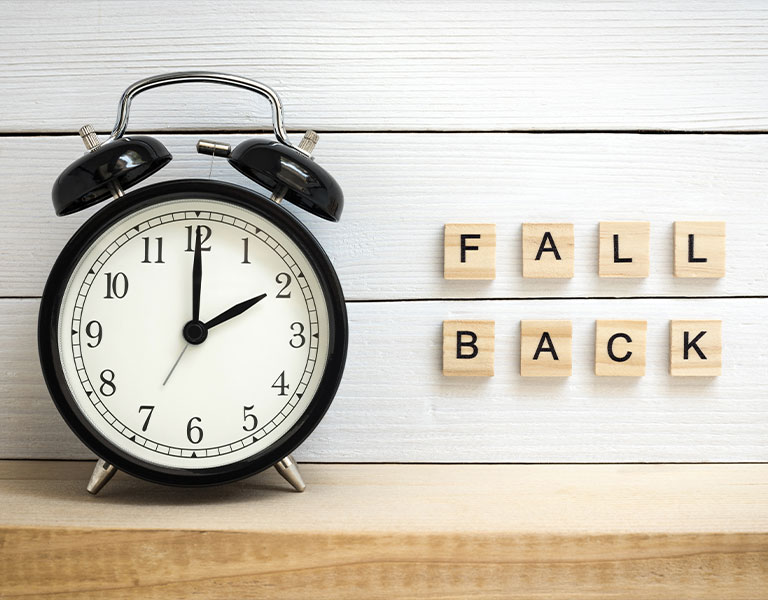

As we prepare to "fall back", it is a good time to reflect upon Daylight Saving Time and why we subject our bodies to a one-hour shift in circadian rhythm twice a year.
DST initially started in Thunder Bay, Canada in 1908 but was popularized in Austria and Germany as an economic measure during the first World War - they thought this would conserve energy. Benjamin Franklin (1784) suggested that Parisians could save candles by getting up an hour earlier in the morning. Evidently, he meant this as a joke but there have been various permutations of DST since that time, including one idea to adjust the clocks by 20 min each of the four Sundays for the month of April and then back every Sunday for a month in September for a total of 8 changes a year. And no, DST wasn't for the farmers. As it turns out, farmers are not fans of DST.
I recently had the chance to speak with Dr. Muhammed Adeel Rishi, lead author of the AASM position statement on Daylight-Saving Time (DST). The position paper supports the elimination of DST and maintaining standard time. According to Dr. Rishi, the decision to abolish time switches was straight-forward, given the plethora of information about strokes, myocardial infarctions and motor vehicle collisions the Monday after DST begins. He pointed out that the risk doesn't actually drop until we gain that hour back in the fall. This makes it clear from a public health standpoint that DST is harmful. He provided me with more of the rich history of DST and why it isn't as easy to eliminate it as it seems. At first glance, this seems like an issue that should be readily resolved - more heart attacks, strokes, medical errors and car accidents due to that loss of sleep? It seems logical to simply stop the practice of switching times. As Dr. Rishi continued to learn about DST, he discovered that it is much more complex with many diverse stakeholders.
Dr. Rishi tells me that industry has a large influence on this issue - DST started off covering 6 months a year but is now 8. This was in part due to heavy lobbying by the candy industry - they wanted kids to be able to trick-or-treat for an additional hour before it got too dark.
Politicians need to weigh out both the public safety aspects in addition to the financial aspects of tucking that hour away in the spring. Also, public sentiment needs to be considered - although now the public seems to favor the elimination of DST, in the past, this was not always the case. In 1973, the country stopped DST due to decreased oil availability and an attempt to save energy. It turned out the be an unpopular decision by the time they resumed DST in 1974.
Dr. Rishi and his team spent about a year reviewing over 200 articles on DST and ultimately came up with the recommendation to stop the practice and maintain standard time. Currently, states are able to opt out of DST and remain on standard time but cannot simply switch to DST full time. As a creative work-around, some New England states have proposed moving to central time and then plan to opt out of DST thus effectively remaining on what is currently DST.
Clearly, this issue is multifaceted. As we regain that extra hour this weekend, I know I will be enjoying that extra hour of sleep as I hope this will be the last time we need to make this switch.
- https://www.timeanddate.com/time/dst/history.html